When your attic gets hot in the summer months, you are making a loss every time you run your AC unit. A hot roof deck can cause attic temperatures to exceed 150°F, and a lot of that heat is exposed directly to your living area. One of the easiest and least expensive ways to prevent this from occurring is with a radiant barrier Installation that reflects the majority of that heat before it ever makes it to the rooms.
It is a one-time process that continues to benefit your roof for the lifetime of its structure, which costs less than a complete roof insulation installation. Let’s break down what it actually costs, how the price is determined, and if it’s a good idea for your home.
What Is a Radiant Barrier?
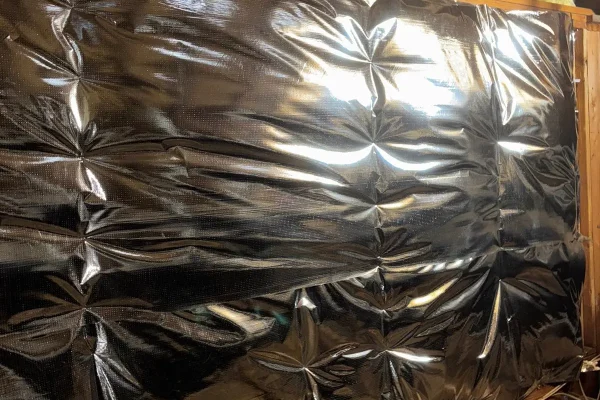
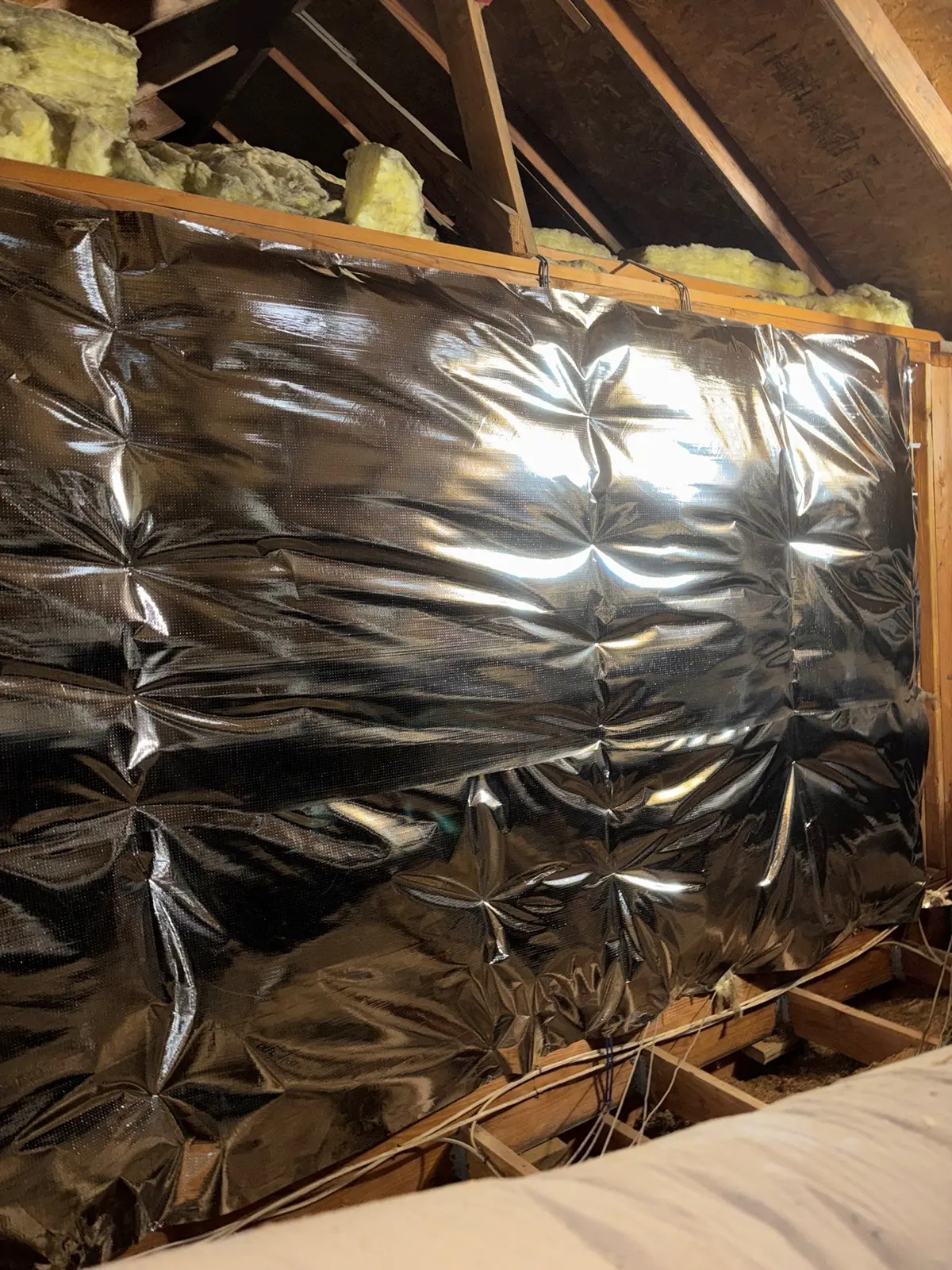
A radiant barrier creates a reflective surface usually made with aluminum foil on paper, film, or rigid board to reflect radiant heat back against your home before it can be absorbed into your home. Unlike traditional insulation, which helps to slow conductive heat transfer, a radiant barrier acts specifically against the radiant heat, which drains off a hot roof deck on a summer afternoon.
Reflecting the rest of that heat back into the attic diminishes attic temperatures by up to 30°F and saves cooling energy by 5% to 10%.
How much does it cost on average to install a radiant barrier?
Professional installation typically costs $710 to $2,840, with most projects averaging around $1,700. Per square foot, installed pricing runs $0.30 to $2.00, depending on material type and installation method. Here’s how total cost scales with attic size:
| Attic Size (sq. ft.) | Average Cost Range |
| 500 | $875 – $1,000 |
| 1,000 | $1,750– $2,000 |
| 1,500 | $2,600 – $3,000 |
| 2,000 | $3,500 – $4,000 |
What are the Radiant Barrier Cost Factors?
Several variables shape your final quote:
Attic size and layout
More square footage means more material and labor hours. Attics with steep pitches, low clearance, or lots of framing take longer to work in.
Installation method
Draping foil over existing floor insulation is faster and cheaper than stapling it to rafters or roof decking, which requires overhead work in a hot, cramped space.
Material quality
Thicker, more durable foil with a longer warranty costs more upfront but holds its reflectivity longer.
Existing insulation and ventilation
If your attic lacks proper ventilation, a contractor may need to address that first, since trapped heat behind a radiant barrier without adequate airflow can create moisture problems.
New construction vs. retrofit
Installing a radiant barrier during a new build is usually cheaper, since it’s built into the roof deck as part of the original framing work with no extra labor trip.
What are the types of Radiant Barrier?
Radiant barriers vary in material, cost, and performance depending on your attic’s layout and how much reflectivity you need. Here’s how the two main types compare:
| Type | Material Cost (per sq. ft.) | Reflectivity | Best For |
| Single-sided foil | $0.10 – $0.25 | Reflects heat from one direction | Simple attics, staple-up or floor-lay installs |
| Two-sided foil | $0.50 – $0.90 | Up to 50% more effective with air gaps on both sides | Attics where maximum performance matters most |
| Spray-on coating | $0.50 – $1.00 | Slightly less reflective than foil | Attics with lots of vents, pipes, or tight obstructions |
Labor vs. Material Costs
A quote’s price tag mostly reflects labor, not materials. Here’s the breakdown.
| Cost Component | Price Range | Notes |
| Materials (foil or spray) | $0.10 – $0.90 per sq. ft. | Smaller share of the total bill |
| Labor (hourly) | $30 – $80 per hour | Typical rate for insulation contractors |
| Labor (per sq. ft.) | $0.60 – $1.40 per sq. ft. | Charged on top of materials |
| Typical timeline | 1 day | For a 1,000–2,000 sq. ft. attic, two-person crew, no major obstacles |
Radiant Barrier Add-On Costs
Some homeowners include a radiant barrier as a secondary service call in their attic project to save the extra expense for a second service. The most popular additional options:
- Blown-in insulation top-up ($1 to $4 per square foot)
- Attic fan installation ($600 to $900)
- Air sealing around penetrations and fixtures
- Attic restoration for rodent damage, contamination, or old, compressed insulation
- Ductwork inspection and sealing
Radiant Barrier Cost Savings
A radiant barrier will usually save on summer cooling expenses and can quickly pay for itself in warmer areas. Homeowners often find that they save 5% to 10% on their energy bills. A properly installed radiant barrier typically outlasts the life of a roof because it will not deteriorate over time as fiberglass or cellulose insulation does.
Does Installing a Radiant Barrier Increase Home Value?
A radiant barrier is more subtle than replacing kitchens or cabinets, but advances in energy efficiency are being actively targeted by potential homebuyers. As an agent, you can leverage lower bills, a cool upper room, and less HVAC stress, particularly in hot summer climates where attic heat is a cited issue for comfort. Homeowners who want to see the difference firsthand can check customer reviews from similar attic upgrades.
DIY vs. Hiring a Radiant Barrier Professional
| Factor | DIY | Professional |
| Method | Floor-lay only (draping foil over insulation) | Floor-lay or staple-up, whichever fits your attic |
| Tools needed | Utility knife, tape measure, dust mask | Professional-grade staplers, safety equipment |
| Time | A full day or more for a first-timer | Usually completed in a single day |
| Difficulty | Manageable for floor-lay; staple-up is physically demanding overhead work | Trained for both methods, including tight or hot attics |
| Risk of mistakes | Gaps, sagging, or blocked ventilation if installed incorrectly | Installed to spec, with attention to airflow and moisture |
| Cost | Materials only: $0.10 – $1.00 per sq. ft. | Materials + labor: $0.30 – $2.00 per sq. ft. installed |
Why You Should Hire a Radiant Barrier Installation Pro?
A radiant barrier is only as effective as it is installed. A wrong answer is not immediately obvious, but rather poses as condensation, mold, or a barrier that doesn’t even end up lowering your cooling costs, months later.
- Attic assessment first: Examines the condition of the ventilation and insulation before installing, rather than covering up issues that will deteriorate below.
- Right method for your attic: Staple-up vs. floor-lay, best determined on-site, depending on roofline and obstructions.
- Quick turnaround: A pro’s job typically takes a day; a do-it-yourself job will take a weekend.
- Warranty coverage: Work issues that arise are covered rather than paid out of pocket.
- Bundled fixes: If ductwork, pests, or old insulation are needed, they can all be secured during the same visit.
Get It Done Right With Tyson Insulation
For those in Fresno or the Central Valley, Tyson Insulation is a licensed local company, 500+ five-star rated with a lot of reviews, installing attic insulation, restoration, and even installing whole house fans, so your attic is not just patched up, it’s fully addressed. Homeowners in Fresno, Visalia, Turlock, Tulare, Madera, Ceres, Atwater, Delano, Wasco, and other nearby areas can get free, no-cost estimates. Phone 559-754-7095 or get a quote on their contact page.
Conclusion
One of the less expensive alternatives for an attic retrofit is a radiant barrier, which can range from $710 to $2,840 for installation and can typically save the homeowner money on their cooling costs in just a couple of years. If used with the correct material, technique, and installation, it will do its job silently for many years, or it will lead to moisture issues in the future. When it comes to saving money and maintaining temperature comfort all year long, the best move is a consultation from an expert.
FAQs
Is a radiant barrier worth it?
Yes, in hot climates, homeowners see a reduction in cooling costs of 5% to 10%, and because it does not deteriorate over time, it is an investment that continues to provide benefits.
How long does a radiant barrier last?
A properly installed radiant barrier is as durable as the roof and, unlike fiberglass, won’t lose reflectivity with use.
How long does it take to install?
A typical medium-sized attic (1,000 to 2,000 square feet) will require about a day for a two-person crew, taking any major blocking or venting work out of the equation.
Does a radiant barrier go over or under insulation?
This depends upon the method. Floor-laid radiant barriers go directly over existing floor insulation, while staple-up barriers are attached to the underside of the roof deck or rafters, above the insulation layer.
What are the merits of installing a radiant barrier?
Cooler attic temps up to 30°F, cooler cooling costs, less cooling system strain, and no replacement or replenishment needed like with traditional insulation.